
-

(G141) Sensory Integration and Burnout in ADHD – 18 Feb 2026
Course5.0 average rating (2 reviews)In this live webinar, discover how sensory processing differences in ADHD contribute to burnout, and learn practical strategies from a sensory integration perspective to recognise, reset, and break the cycle for lasting wellbeing.
-

(G142) Postural Control and Reflexes in Sensory Integration – 3 Mar 2026
CourseIn this live webinar, explore how primitive and postural reflexes shape motor skills and postural control, with evidence-based strategies for integrating reflex work into sensory programs.
-

(G148) Viewing Eating and Drinking Through a Sensory Lens – 23 Mar 2026
Course5.0 average rating (1 review)In this live webinar, discover how all eight senses shape eating and drinking. Learn why some people struggle with textures or mealtimes, and explore evidence-based strategies to support inclusive, positive, and sensory-aware feeding experiences.
Overwhelmed or Under-Responsive? The Sensory Side of Autism
By Dr Lelanie Brewer, 2 April 2026
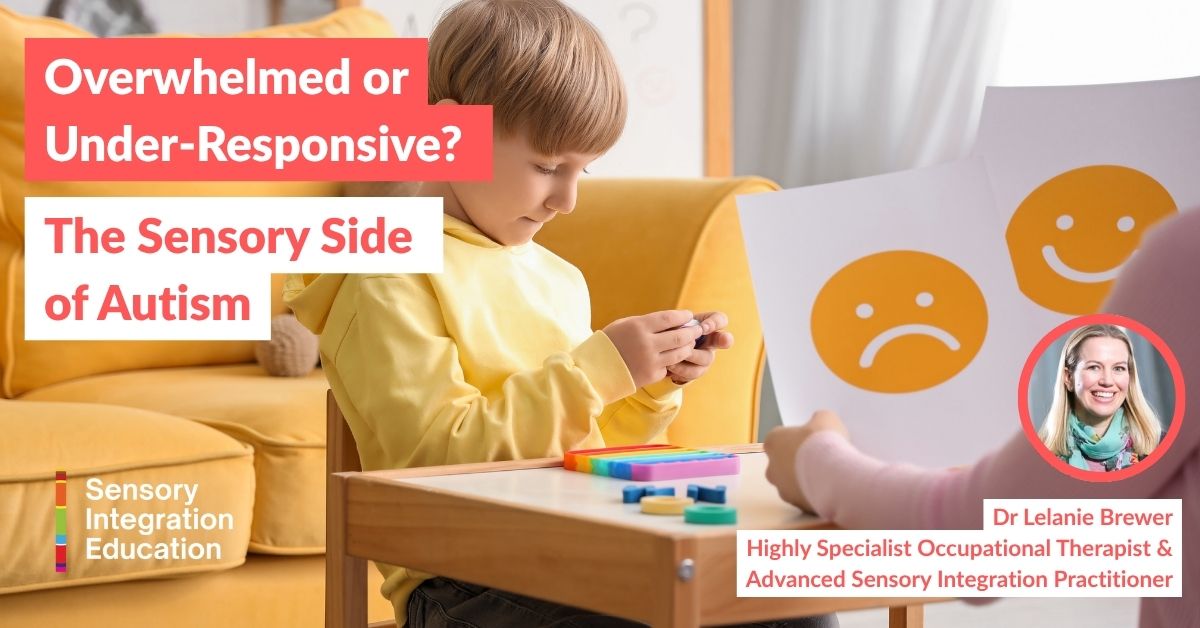
Autism is commonly associated with differences in communication and social interaction. However, a growing body of research highlights that sensory processing differences are also a central aspect of the autistic experience. Many autistic individuals perceive and respond to sensory information in ways that differ from neurotypical individuals. These differences can influence daily functioning, learning, and participation in social environments.
Beyond sensory sensitivity or hyposensitivity, autistic individuals may also experience sensory discrimination difficulties and motor coordination challenges, which are closely linked to how the nervous system processes and integrates sensory input.
Sensory Processing Differences in Autism
Sensory processing refers to the way the nervous system receives, organises and interprets sensory information from the environment and the body. According to Sensory Integration Theory, first developed by occupational therapist A. Jean Ayres in the 1970s, effective sensory processing is essential for producing appropriate behavioural and motor responses.
Research suggests that atypical sensory processing is highly prevalent in autism. Studies indicate that over 90% of autistic individuals report sensory processing differences, including heightened or reduced sensitivity to sensory stimuli.
Sensory input can be categorized into several systems:
-
Visual (sight)
-
Auditory (sound)
-
Tactile (touch)
-
Olfactory (smell)
-
Gustatory (taste)
-
Vestibular (balance and movement)
-
Proprioceptive (body position and force)
Differences in these systems can influence how autistic individuals experience everyday environments.
Sensory Modulation: Hyper- and Hyposensitivity
One of the most commonly discussed aspects of sensory processing in autism is sensory modulation, which refers to the nervous system’s ability to regulate responses to sensory input.
Autistic individuals may demonstrate:
Hypersensitivity (Over-responsiveness)
Hypersensitivity occurs when sensory stimuli are perceived as excessively intense or overwhelming.
Examples include:
- Sensitivity to loud or unpredictable sounds
- Discomfort with bright lighting or visual clutter
- Aversion to certain clothing textures or physical contact
- Distress in crowded or highly stimulating environments
These experiences can lead individuals to avoid certain environments or situations to manage sensory discomfort.
Hyposensitivity (Under-responsiveness)
Hyposensitivity involves reduced sensitivity to sensory input, often leading individuals to seek additional stimulation.
Examples include:
- Seeking deep pressure or tight hugs
- Engaging in repetitive movement such as rocking or spinning
- Touching objects frequently to gain sensory feedback
- Preference for strong tastes or smells
These behaviours can support self-regulation by increasing sensory input to the nervous system.
Sensory Discrimination Difficulties
In addition to sensory modulation differences, autistic individuals may experience challenges with sensory discrimination. Sensory discrimination refers to the brain’s ability to interpret and differentiate between sensory stimuli.
Whereas modulation concerns how strongly a stimulus is perceived, discrimination concerns how accurately it is interpreted.
Difficulties with sensory discrimination may include:
- Difficulty locating the source of a sound
- Trouble distinguishing between similar textures by touch
- Challenges identifying body position without visual cues
- Difficulty judging the amount of force required to manipulate objects
For example, a child may hold a pencil too tightly or too loosely because the proprioceptive system is not providing clear information about grip force. Similarly, challenges with tactile discrimination can make activities such as dressing, handwriting, or using utensils more difficult.
Research suggests that sensory discrimination differences may affect learning, particularly in tasks that require fine motor precision or body awareness.
Motor Coordination Differences
Motor coordination differences are also frequently observed in autism. These challenges may affect fine motor skills (small, precise movements) as well as gross motor skills (larger body movements involving balance and coordination).
Motor coordination difficulties can include:
- Clumsiness or frequent bumping into objects
- Difficulty maintaining balance
- Delayed development of motor skills such as crawling or walking
- Challenges with handwriting or tool use
- Difficulty with sports or coordinated movement tasks
Motor challenges are closely linked to sensory processing, particularly the vestibular and proprioceptive systems. These systems help the brain understand body position, movement, and spatial orientation. When sensory signals from these systems are less precise, coordinating movement becomes more difficult.
Sensory Overload
When the nervous system receives more sensory input than it can effectively process, an individual may experience sensory overload. This occurs when sensory stimuli accumulate faster than the brain can organise and interpret them.
Sensory overload can result in:
- Anxiety or distress
- Withdrawal or shutdown
- Increased self-regulatory behaviors
- Difficulty communicating or concentrating
Sometimes, sensory overload may lead to very intense responses to overwhelming sensory or emotional experiences. (These intense experiences have historically been referred to as meltdowns).
Self-Regulation and Stimming
Repetitive behaviours, often referred to as stimming, play an important role in sensory regulation for many autistic individuals.
Examples include:
- Hand flapping
- Rocking
- Repeating sounds or words
- Tapping or manipulating objects
Research suggests that stimming behaviors may serve several functions, including regulating sensory input, managing emotional states, and maintaining attention. Increasingly, clinicians and researchers emphasize understanding these behaviours as adaptive self-regulation strategies rather than behaviours that should be eliminated.
Implications for Support and Intervention
Understanding sensory processing, sensory discrimination and motor coordination differences is essential for supporting autistic individuals in educational, clinical and community settings.
Evidence-based strategies may include:
- Creating predictable and low-stimulation environments
- Providing sensory supports
- Allowing opportunities for movement breaks
- Using therapy interventions based on sensory integration principles
- Supporting development of motor planning and coordination skills
When environments are designed with sensory needs in mind, autistic individuals are often better able to engage in learning, communication, and social participation.
Conclusion
Sensory processing differences are a core component of the autistic experience. These differences extend beyond sensory sensitivity to include challenges with sensory discrimination and motor coordination, which influence how individuals interact with their environment.
By understanding the neurological foundations of these differences, educators, clinicians, and communities can move toward more supportive and inclusive environments that accommodate diverse sensory experiences.
Dr Lelanie Brewer
Highly Specialist Occupational Therapist, Advanced Sensory Integration Practitioner, PhD, MScOT, BSc, FHEA
References
Ayres, A. J. (1972). Sensory Integration and Learning Disorders. Los Angeles: Western Psychological Services.
Sensory Integration Education is a leading UK provider of postgraduate and CPD training in sensory integration. Our postgraduate courses are accredited by Sheffield Hallam University.
Check Out Our Upcoming Live Training Events
You can purchase individual events or get access to a whole year of CPD events with a Lifelong Learning Programme subscription.
