When the World Feels Too Much: Sensory Processing and the Perinatal Experience
By Laura Spence, Midwife & Founder of NeuroNatal Academy CIC - 30 April 2026
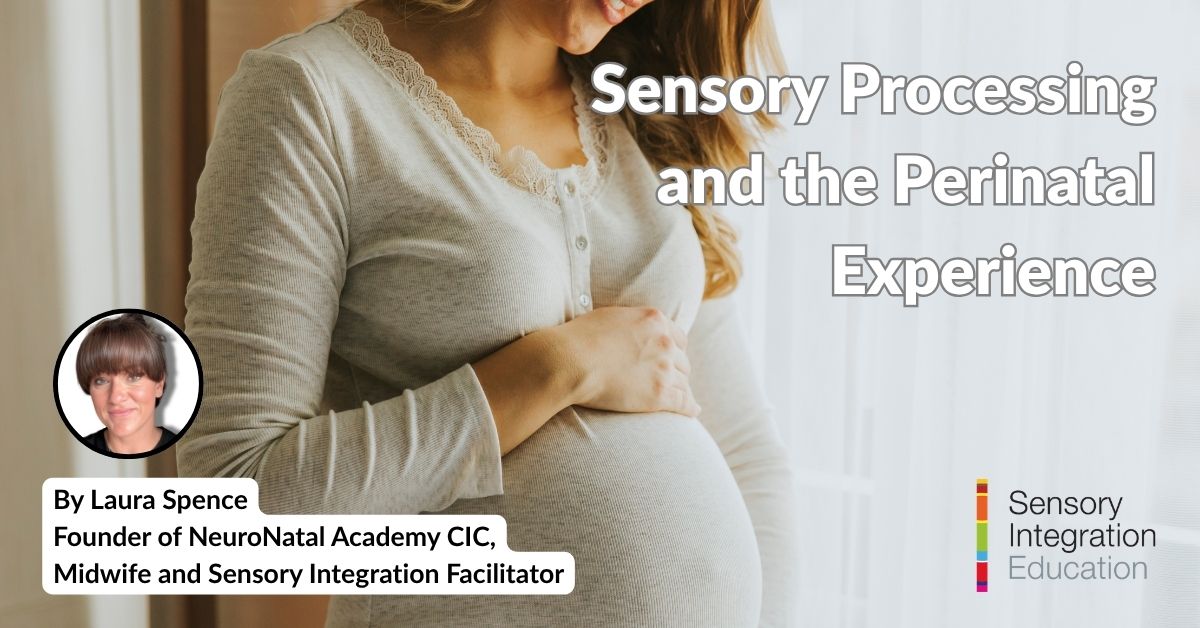
Pregnancy changes everything.
What we don’t talk about enough is how it changes the way the world feels.
From the earliest weeks, rising oestrogen and progesterone begin to shift the nervous system. Many women notice this quickly. Smells feel stronger, textures harder to tolerate, and sounds sharper than before. For some, it is manageable. For others, it can feel overwhelming. Everyday sensations such as bright lighting, background noise, or unexpected touch can suddenly feel intrusive, even distressing.
This is often misunderstood as anxiety. It is not just that. It reflects real changes in sensory processing.
How Pregnancy Shapes Sensory Processing
From a sensory integration perspective, pregnancy can alter how sensory input is registered and modulated. A nervous system that previously filtered input with ease may become more sensitive, less predictable, and quicker to overload. When that happens, it affects more than comfort. It can influence regulation, attention, and the ability to process what is happening.
Sensory processing and executive function are closely linked. When the sensory system is overwhelmed, the brain’s capacity for attention, memory, and decision-making is reduced. Research has shown that pregnancy already places increased demand on cognitive processes, with subtle changes in memory and attention. When this sits alongside heightened sensory input, it can create a kind of double load. There is more coming in, with less capacity to manage it.
The Impact of Sensory Overload on Cognition and Regulation
For neurodivergent women and birthing people, including those with ADHD, autism, or sensory processing differences, this shift often builds on an already sensitive system. Pregnancy does not create these differences, but it can intensify them. Emerging research suggests that neurodivergent people report more intense sensory experiences in pregnancy, alongside increased distress and more difficult experiences of care.
Maternity environments are, by nature, high-stimulus spaces. They are busy, bright, and unpredictable. Care often involves repeated sensory input such as monitoring, examinations, and physical contact, sometimes with little time to prepare. I have seen how quickly a maternity environment can become overwhelming when the sensory load is too high. What is routine for staff can be experienced as intense and difficult to tolerate.
Creating Sensory-Informed Maternity Environments
The good news is that small changes matter. Reducing unnecessary sensory input, explaining before touch, allowing time to process, and offering choice can support regulation and improve experience.
This is not about specialist care. It is about recognising sensory processing as part of everyday perinatal care.
There is a natural overlap between sensory integration practice and maternity care. The overlap between our professions has never felt more timely. I think we are just getting started.
By Laura Spence
ADHD Midwife, MSc Perinatal Mental Health, Sensory Integration Facilitator, NHS Clinical Entrepreneur and Founder of NeuroNatal Academy CIC.
NeuroNatal Academy CIC is a social enterprise dedicated to improving perinatal care for neurodivergent women and birthing people. NeuroNatal provides education and training, resources,consultancy and advocacy at the intersection of neurodivergence, maternity care and perinatal mental health.
References
Davies, S. J., Lum, J. A. G., Skouteris, H., Byrne, L. K., & Hayden, M. J. (2018). Cognitive impairment during pregnancy: A meta-analysis. Medical Journal of Australia, 208(1), 35–40.
Hoekzema, E., et al. (2017). Pregnancy leads to long-lasting changes in human brain structure. Nature Neuroscience, 20, 287–296.
Hampton, S., et al. (2022). A qualitative exploration of the experiences of autistic and non-autistic women during pregnancy and childbirth. University of Cambridge Repository.
Elliott, H., et al. (2024). Neurodivergent experiences in the perinatal period: A systematic review. Journal of Affective Disorders.
A. Jean Ayres (2005). Sensory Integration and the Child. Western Psychological Services.