
Do You See Me? Understanding Hidden Sensory Differences and Learning Disabilities
By Dr Lelanie Brewer, 15 June 2026
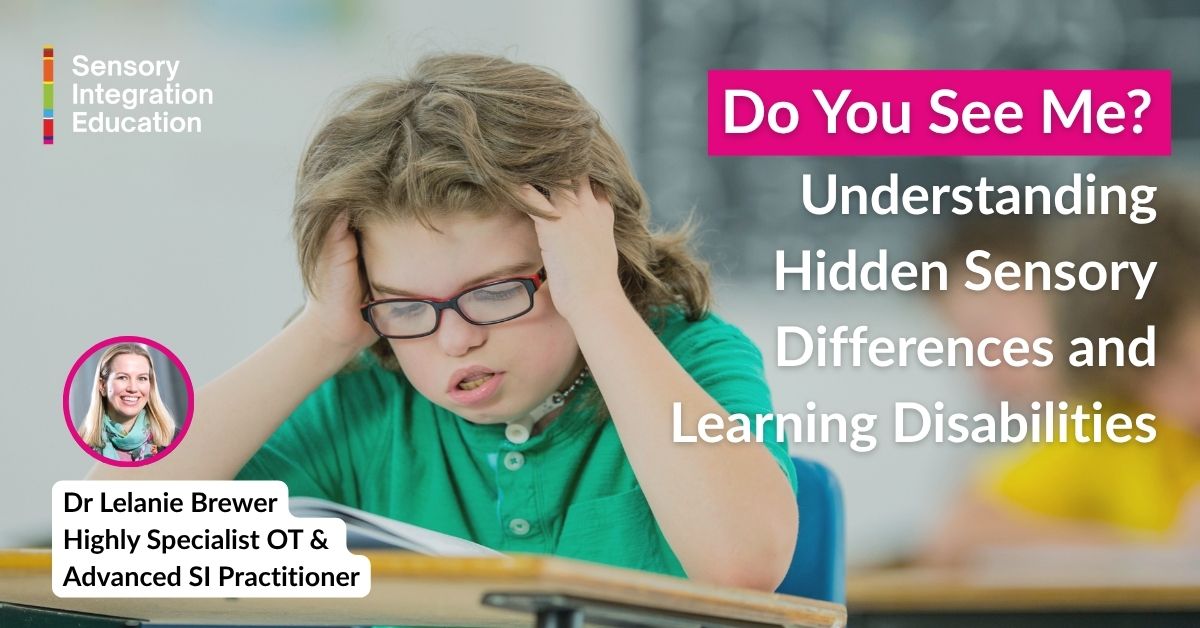
Learning Disability Week is a time to celebrate, listen to and amplify the voices of people with learning disabilities. This year’s theme, “Do You See Me?”, invites us to look beyond labels and assumptions and recognise the whole person including their experiences, strengths, challenges and individuality.
One aspect of life that often goes unseen is the impact of sensory differences on participation in daily activities. Many people with learning disabilities experience the world differently through their senses (Lyons-Warren et al., 2022). These sensory differences may not be visible to others, but they can significantly affect everyday life, wellbeing, communication, and participation in the community.
What Are Sensory Differences?
Our brains constantly process information from our senses. For some people with learning disabilities, this sensory information can be experienced more intensely, less intensely, or in a different way altogether.
A busy shopping centre may feel overwhelmingly loud. Bright lighting may cause discomfort. Certain textures of clothing may be unbearable, while some people may seek additional sensory input through movement, touch, or repetitive actions. For others, discrimination difficulties may impact on motor coordination and the ability to carry out everyday activities for themselves. These experiences are real, even when they are not obvious to those around them.
The Hidden Impact of Everyday Environments
Because sensory differences are often invisible, they can easily be misunderstood. A person who leaves a noisy room may be seen as antisocial when they are actually trying to manage sensory overload. Someone who struggles to focus in a busy environment may be viewed as distracted rather than as someone coping with overwhelming sensory information.
Research from Cardiff University exploring the experiences of people with sensory sensitivities found that sensory differences can affect almost every aspect of daily life (Price et al., 2025). Participants described how bright lights, loud noises, crowded spaces, strong smells, and unexpected sensory experiences could make ordinary activities exhausting and difficult.
For someone with a learning disability, a trip to the supermarket may involve much more than choosing what to buy. Fluorescent lighting, background music, announcements, crowded aisles, and strong smells can create an overwhelming sensory experience. Similarly, schools, workplaces, healthcare settings, and community events can present sensory challenges that affect concentration, communication, confidence, and wellbeing.
Many people in the study described needing significant recovery time after spending time in sensory-rich environments. Others avoided certain places altogether because the sensory demands were simply too much. These hidden challenges can limit opportunities to socialise, learn, work, and fully participate in community life.
Listening to Lived Experience
People with learning disabilities are experts in their own experiences. Many describe sensory differences as something that affects every part of their day from travelling on public transport to attending appointments, going to work, or spending time with friends and family.
The Cardiff study also highlighted the many strategies people use to navigate a world that is not always designed with their sensory preferences or needs in mind. Participants spoke about wearing ear defenders or noise-cancelling headphones, using sunglasses indoors, seeking out quiet spaces, planning journeys carefully, and relying on trusted supporters who understand their needs.
While these strategies can help, they also reveal the extra effort that many people put into everyday activities. This effort often goes unnoticed by others. By listening to lived experiences, we can better understand the barriers people face and identify practical ways to make environments more inclusive for those with sensory differences.
Small Changes Can Make a Big Difference
Creating sensory-inclusive environments does not always require major changes. Often, small adjustments can have a significant impact:
- Reducing unnecessary background noise
- Providing access to quiet spaces
- Offering information in accessible formats
- Being flexible with communication methods
- Allowing extra time and choice
- Considering lighting, smells, and crowding when planning activities
- Asking individuals what support works best for them
When people feel understood and supported, they are more able to participate, contribute, and thrive.
Seeing Beyond What Is Visible
Inclusion starts with awareness. When we recognise hidden sensory differences, we move away from judging behaviours and towards understanding needs.
The theme “Do You See Me?” is a reminder that every person deserves to be recognised, respected, and included, along with their specific sensory preferences. It encourages us to look beyond what we immediately notice and appreciate the experiences that may not be visible on the surface.
By creating sensory-aware environments and listening to the voices of people with learning disabilities, we can build communities where everyone feels seen, valued, and understood.
References:
Lyons-Warren, A. M., McCormack, M. C., & Holder, J. L., Jr. (2022). Sensory processing phenotypes in Phelan-McDermid syndrome and SYNGAP1-related intellectual disability. Brain Sciences, 12(2), Article 137. https://doi.org/10.3390/brainsci12020137
Price, A., Oates, R., Sumner, P., & Powell, G. (2025). “They impact my life daily and greatly”: A qualitative exploration of how subjective sensory sensitivities are experienced, exacerbated, and coped with. Neurodiversity, 3. https://doi.org/10.1177/27546330251383024
