
Prioritising Physiological Safety for Sensory Regulation
By Beth Smithson, 3 June 2026
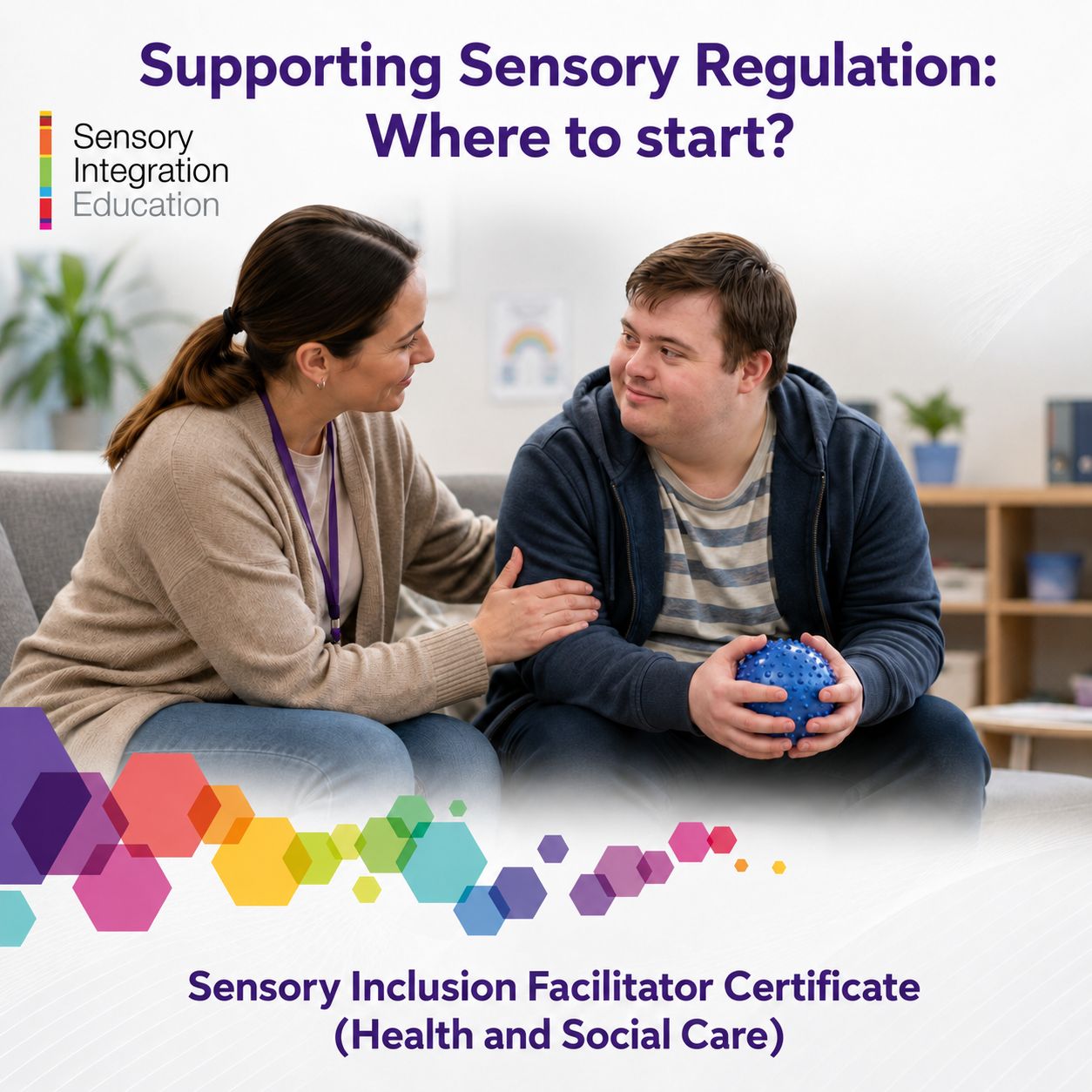
In our Sensory Integration Education Sensory Inclusion Facilitator Certificate weekly drop in session this week, someone asked a really important question. Where do we start when supporting sensory regulation?
We used the Person, Environment, Occupation model to think about where we may start in each domain, but we paused on something that can be easily overlooked in the person domain. The body needs to feel physiologically safe enough for regulation to be available.
Co regulation and self regulation do not happen in isolation from the body. If the body is working hard to manage hunger, thirst, pain, tiredness, discomfort, constipation or a toileting need, it may not be able to settle into a state where regulation is easily supported.
Our senses play a vital role in helping the body find this safe physiological state. They help us notice what is happening in the world around us, but they also help us notice what is happening inside the body. Sensory processing is not only about sound, light, touch, movement and smell. It is also about internal body cues such as hunger, thirst, pain, tiredness, temperature, discomfort, constipation and the need to use the toilet.
When the body feels safe and balanced enough, the nervous system has a better chance of accessing a rest and digest state. This is the state where connection, communication, thinking, learning, participation and regulation are much more available.
But if the body is trying to restore balance because something important is unmet, it is already under demand. A person may then have less capacity available to manage the environment, respond to others, process information, cope with transitions or engage in the task in front of them.
This is not about behaviour first. It is about the body first.
A person may not be able to say, “I am thirsty,” “I am constipated,” “I am exhausted,” or “I am in pain.” This is where we can help teams slow down and ask simple but important questions, both in the moment and as part of wider support or care planning.
- Has this person had a drink?
- Have they eaten?
- Could they be in pain?
- Have they slept?
- Do they need the toilet?
Are they constipated? - Are they too hot, too cold or uncomfortable?
- Is the environment making it harder for them to notice or communicate what their body needs?
We can think about the person and what internal body cues they notice or miss. We can think about the environment and whether it supports access to drinks, food, toilets, rest, comfort and support. We can think about the occupation and whether the person is being expected to participate when their body does not yet have enough capacity.
When we are supporting staff who are new to sensory processing, this may be one of the most powerful places to begin. Before we introduce a sensory strategy, recommend a tool, or ask someone to regulate, we may need to pause and ask what the body is already trying to manage.
Beth Smithson, Director of Lifelong Learning.
Want to Learn How to Put “Body First” Into Practice
Continue Your Learning
This kind of thinking — starting with physiological safety, using the Person–Environment–Occupation model, and noticing the internal cues a person can’t always name — is exactly what we explore on the Sensory Inclusion Facilitator Certificate.
It’s a practical, self-paced course that gives you a framework for recognising sensory differences — including internal body cues like hunger, pain and discomfort — and adapting everyday environments to support comfort, participation and regulation. No clinical background needed.