
Advancing the Evidence Base: Dr Aimee Piller on the Future of Sensory Integration Research
20 August 2026
SIE's magazine SensorNet has interviewed Dr Aimee Piller, PhD, OTR/L, BCP, FAOTA, a paediatric occupational therapist, researcher and owner of Piller Child Development. In the interview, Aimee reflects on a decade of growth in the sensory integration evidence base, and looks ahead to what the next five years could mean for practitioners, families and the wider sensory community.
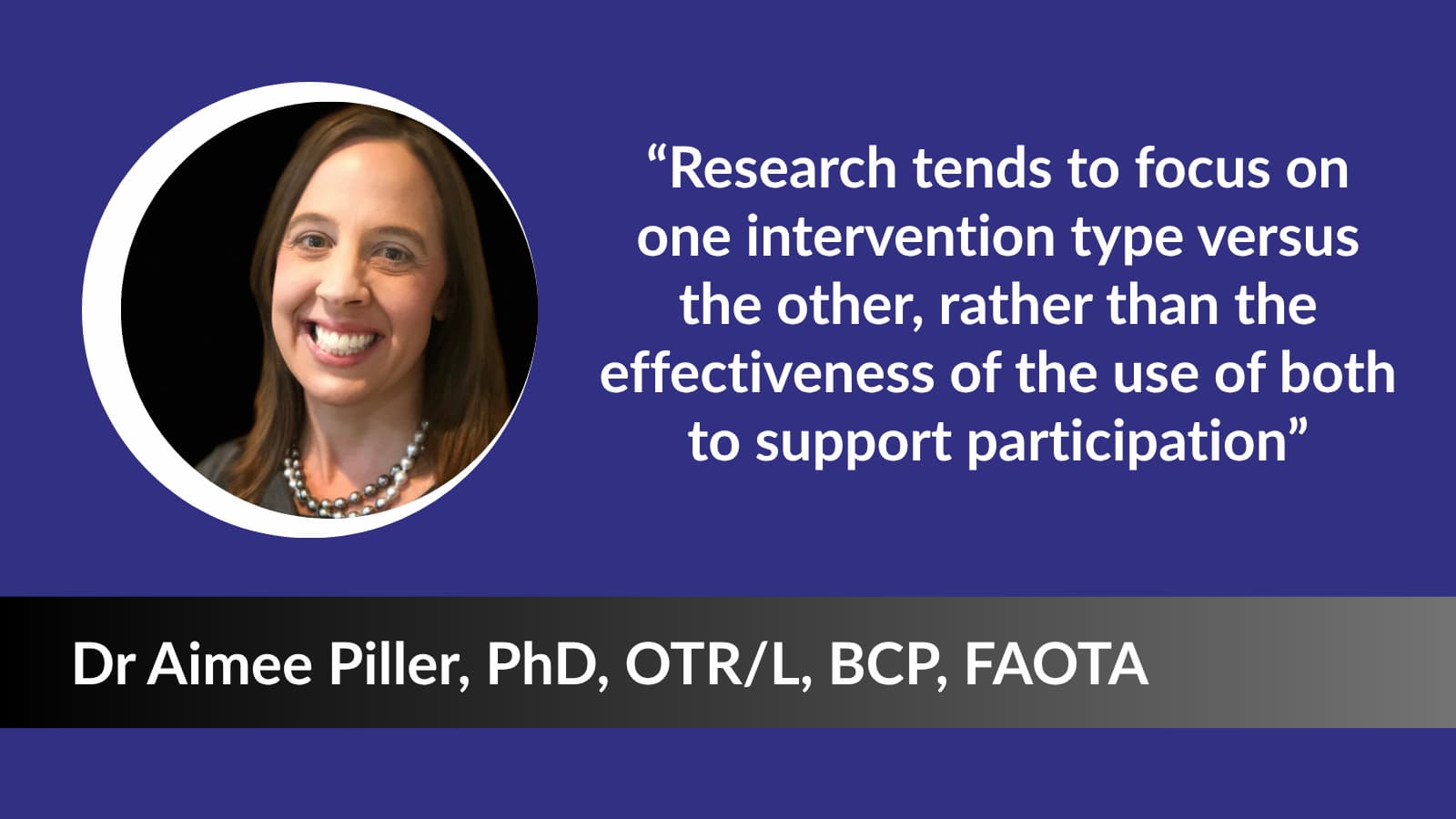
Aimee told SensorNet that the growing body of high-level evidence has allowed practitioners to advocate with real confidence for coverage and support for clients with sensory processing challenges, including those with autism spectrum disorder. She was equally clear, though, that significant questions remain about how sensory integration is applied in combination with other interventions, something experienced practitioners tend to navigate intuitively, but which research and training haven't always kept pace with.
She was direct about where she sees research and practice pulling apart:
"Research tends to focus on one intervention type versus the other, rather than the effectiveness of the use of both to support participation."
Aimee also pointed to two trends changing how sensory integration is delivered: its move beyond clinical settings into schools, and the rise of group-based therapy. She recently co-authored a manual on running group sessions without losing individualised, fidelity-driven treatment, an approach she says is already helping ease pressure on stretched therapist caseloads, with strong early results for clinicians and families alike.
On the challenges facing large-scale research, Aimee was candid about funding: most current evidence centres on the autistic population simply because that is where research funding has historically been available, leaving other groups, including ageing adults with sensory needs, underrepresented. She also pointed to gaps in what even well-designed RCTs can capture, arguing that case studies, case series and mixed-methods approaches are essential for reflecting the clinical reasoning and family perspective that sit behind every intervention.
Family-centred and community-based practice featured prominently in the conversation. Aimee described children as embedded within a family unit, co-regulating with parents throughout early childhood, and referenced her own recent qualitative research showing that sensory integration treatment measurably improves participation and satisfaction for the whole family, not just the child.
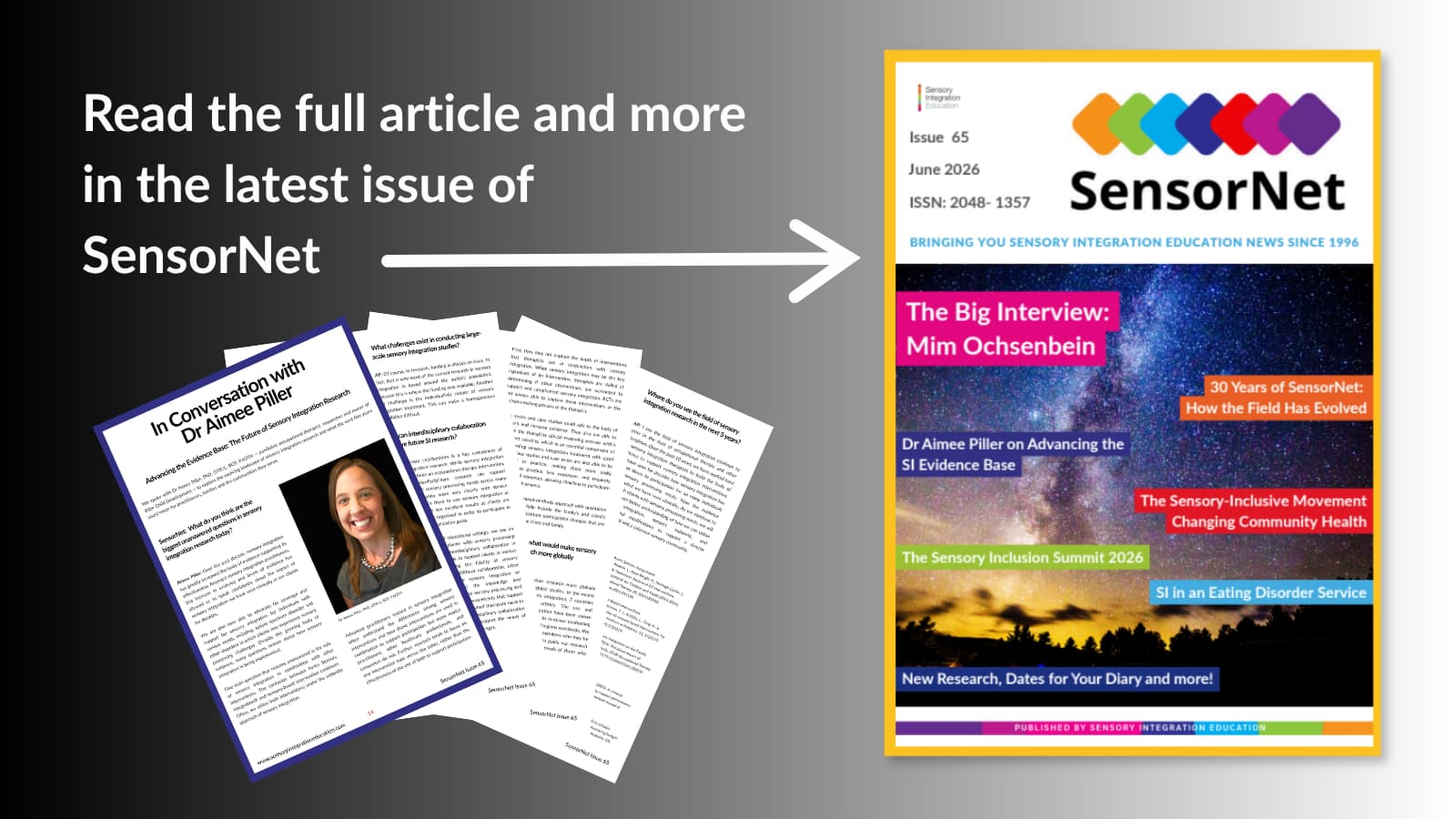
In the full interview, Aimee goes into more depth on the methodological changes she'd like to see in future SI research, what genuine interdisciplinary collaboration with professions like speech therapy looks like in practice, and what would make sensory integration research more globally applicable, including her reflections from a recent systematic review spanning just seven countries. She also shares her outlook on where the field is heading over the next five years, as the evidence continues to catch up with what clinicians have observed for decades.
The full interview is published in SensorNet Issue 65.
Read the full interview
Access to SensorNet is just one benefit of Lifelong Learning Programme membership, which also includes live monthly webinars, a growing suite of on-demand CPD courses, and peer support through the SI Network Community.
