
EmphaSIze June 2026: Understanding Sensory Integration in Older Adults
By Sensory Integration Education, 1st June 2026
Welcome to the June issue of EmphaSIze where this month we're focusing on Understanding Sensory Integration in Older Adults.
This month, we’re exploring the often-overlooked topic of sensory differences in older adults, highlighting how sensory processing changes as we age and the impact this can have on daily life, communication, balance and overall wellbeing. As therapists, we have a vital role in recognising these sensory shifts, adapting environments and supporting individuals to remain engaged, safe and connected.
In this issue, we've put together useful information, articles, books, and product ideas to help better inform ourselves of how sensory differences can affect older adults as well as insights and strategies for how we can help and support them in managing their sensory needs.
Would you like to write a guest blog?
Do you have a sensory-related story you’d like to share with the SIE community? If you have clinical experience, research insights or a perspective on sensory processing that would resonate with a health professional audience, we would love to hear from you!
Find out how to contribute here →
News & Features
Do Sensory Differences Change as We Age?
Do sensory processing differences disappear with age — or do they simply change over time? Written by Dr Lelanie Brewer, this insightful blog explores how sensory experiences can evolve across the lifespan, shaped by nervous system development, coping strategies, hormones and ageing.
The blog looks at why sensory sensitivities may change over time, how adults adapt their environments to meet their sensory needs, and why understanding sensory regulation is essential for wellbeing at every stage of life.
Enhancing Quality of Life in Care Homes with a Sensory Informed Approach
This article explores how sensory processing differences in older adults can significantly affect daily life in care home settings, from participation in meals and social activities to overall wellbeing.
As care home residents often have limited control over their sensory environment, the article stresses the importance of thoughtfully designed spaces that balance stimulation and calm and outlines how sensory-informed interventions, including targeted physical and environmental strategies, can improve sleep, mood, cognitive function and postural control.
What is Sensory Inclusion? Download Your Free Guide!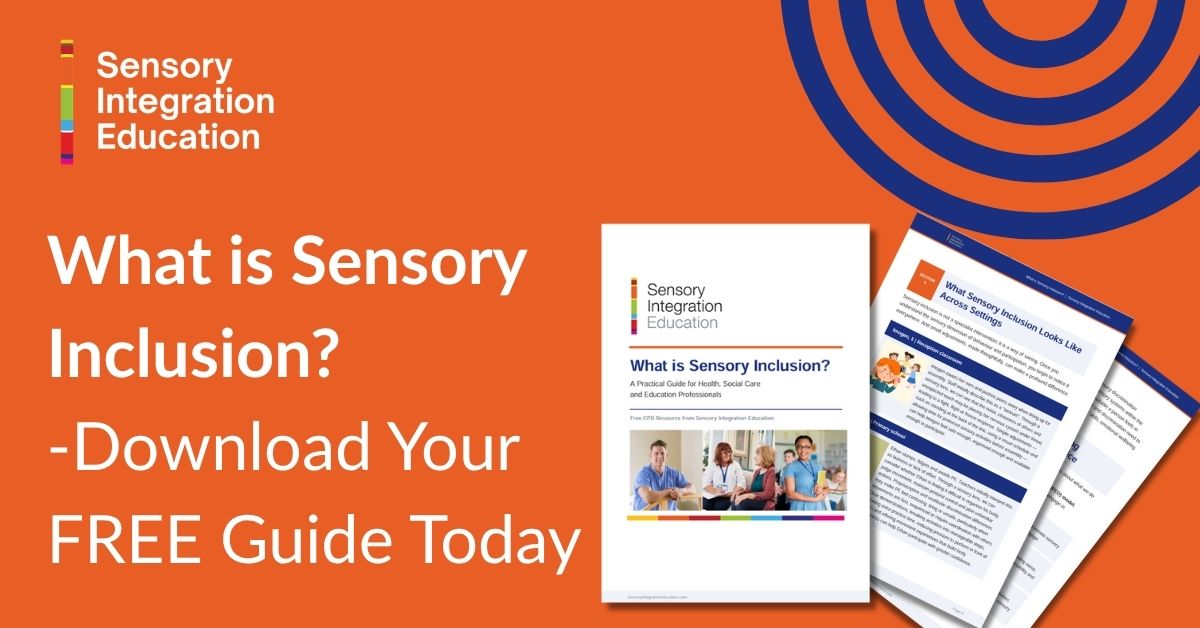
Every person you support has a sensory system. It shapes how they experience the world, how safe they feel, how they engage with others and how they participate in everyday life. Yet sensory processing and integration differences are still widely misunderstood. The person is too often viewed as the problem, instead of recognising the mismatch between a person’s sensory needs, the environment and the demands of the task.
Our FREE ‘What is Sensory Inclusion?’ guide introduces the foundations of sensory inclusion and helps professionals understand how to create environments and experiences that support participation rather than create barriers – across the lifespan.
If you work in health, education or social care, download your free copy today and take the first step towards more sensory-inclusive practice!
Meet Mike - A 85 Year Old with Sensory Processing Differences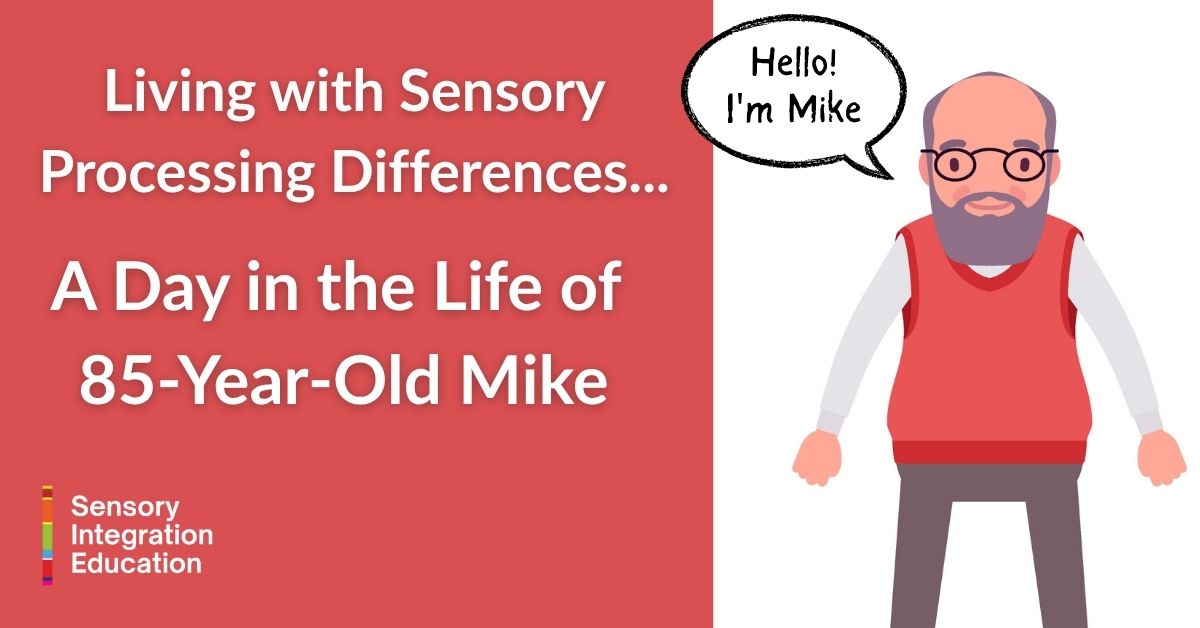
Our Day in the Life of…. stories illustrate how people living with sensory differences across the lifespan may find those differences impacting their day-to-day lives.
Here we focus on 85-year-old Mike who has sensory processing differences and has recently moved into a care home after a number of falls at his home left his family concerned that he was no longer able to manage independently.
Mike’s mobility has also declined to the point where he needs a wheelchair for longer distances and going out in the community.
Read Mike’s story in full here to find out more how difficulties with sensory processing and integration can affect older adults in everyday life.
Understanding Sensory Processing in Older Adults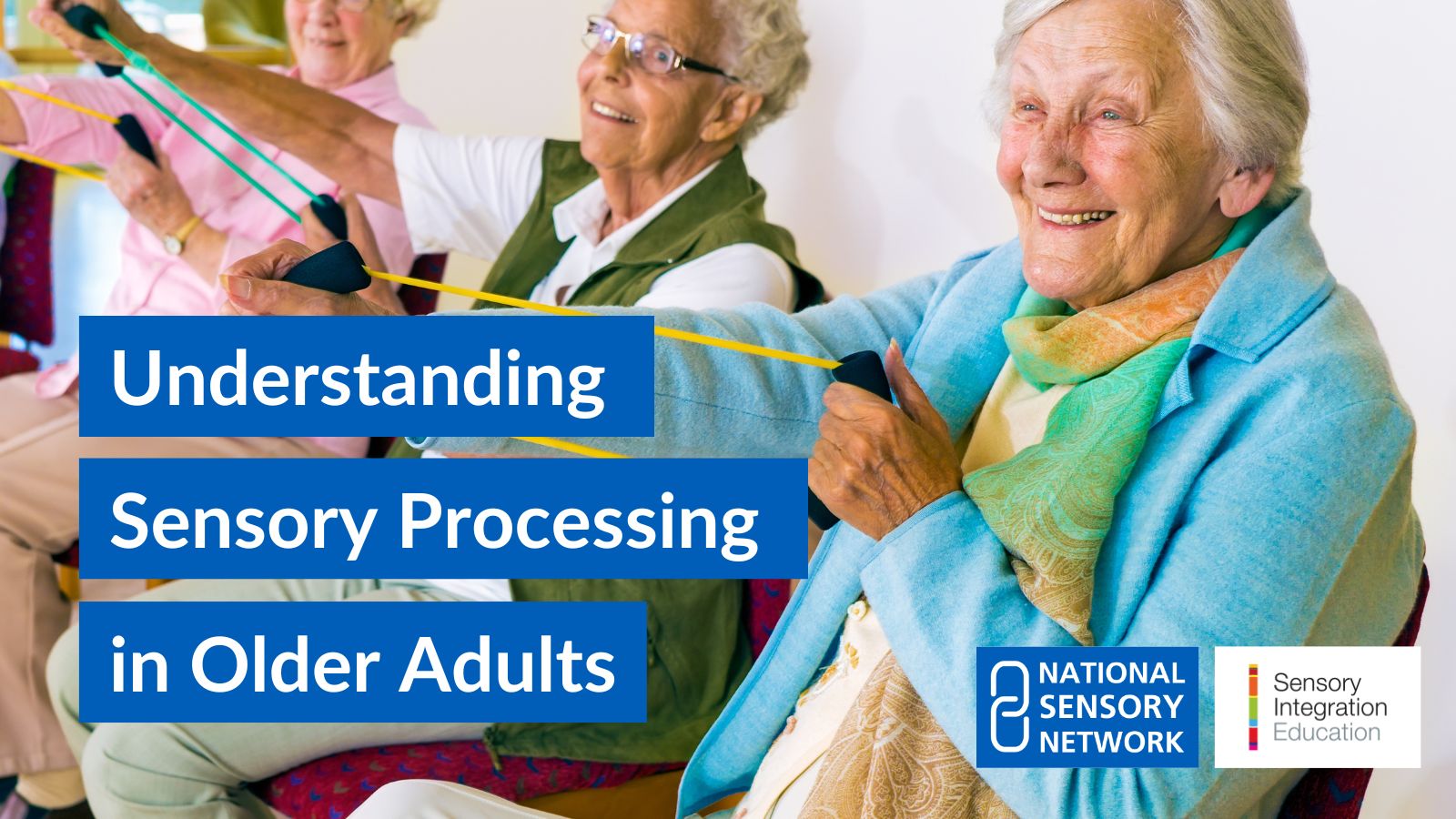
Discover how sensory processing changes as we age and the impact this can have on daily life, communication, balance and overall wellbeing. Published on our sister site National Sensory Network, this insightful article explores the sensory challenges older adults may experience, from changes in vision and hearing to difficulties with touch, movement, and balance, while also highlighting the increased sensory complexities linked to dementia.
Learn how carers, families, and healthcare professionals can create more supportive environments through simple adaptations, sensory-informed approaches, and tailored interventions that help older adults feel safer, more comfortable, and better connected to the world around them.
Also see:
Council poised to launch new autism strategy for all ages
Smart tech trial helps protect dementia patients
What your handwriting could reveal about your dementia risk
NHS dementia patients ‘mislabelled as aggressive and violent’, medics warn
Dementia-designed care homes: What to look for and how to find one
How The Way You Walk Could Be an Early Sign of Dementia
Upcoming Courses and Webinars

We have a number of live webinars that take place throughout the year covering a broad range of SI-related topics. Below is a snapshot of webinars happening in the first few months of 2026 or click here to view a summary of all the upcoming live events.
All these webinars are available to you by signing up to our Lifelong Learning Programme or can be purchased as individual courses:
- Cortical Visual Impairment and Sensory Integration – 15 June 2026
- PhD Research Update: Supporting Parents of Children with Sensory Processing Differences – 2 July 2026
- Sensory Focused Assessment to Drive Functional Outcomes: From Impact Statements to Goal Attainment – 14 July 2026
- Designing ASI Spaces – 8 September 2026
- Interoception and Developmental Trauma - 24 September 2026
SI Research Digest

Below are links to the most popular sensory integration and sensory processing research papers and findings published on our social channels last month:
Co-authored by SIE’s Dr Lelanie Brewer, this systematic review investigated factors influencing self-care in children and young people as well as interventions that support self-care in children and young people with developmental disabilities.
Dr Brewer shares: "Participation in self-care activities, such as dressing, eating, toileting, and washing, plays a vital role in children's development, well-being and daily participation. Although improving support for these skills is a priority for families, service providers, and decision-makers, research into how self-care develops and the most effective ways to support it remains limited. This research highlights important future directions for addressing these gaps."
This recent study found that visual hypersensitivity or over responsivity, encompassing discomfort to brightness, patterns, flicker, and complex environments, is elevated across a wide range of neurodivergent, neurological, and mental health conditions.
In a large-scale self-report study (N=2,582), all 11 groups demonstrated increased sensitivity across four identified subtypes. While these factors were broadly transdiagnostic, their relative profiles revealed both shared and condition-specific patterns. Sensitivity to intense visual environments was particularly pronounced across autism, ADHD, dyslexia, and dyspraxia, with similar trends observed in fibromyalgia and PPPD. In contrast, migraine and synaesthesia showed distinct response patterns.
Overall, findings support a transdiagnostic model of visual hypersensitivity, suggesting shared underlying vulnerabilities in perceptual processing that extend across traditional diagnostic boundaries.
Older adults with mild cognitive impairment (MCI) may face a greater risk of falls due to challenges with balance, sensory processing and cognitive-motor coordination. While research findings are mixed, evidence suggests that changes in postural control and dual-task performance could play a role. More research is needed to better understand these factors and improve fall prevention strategies for healthy aging
This new scoping review synthesises evidence on gardening and garden-based interventions for people living with dementia and their caregivers. Across 32 studies, findings indicate consistent improvements in psychosocial wellbeing, mood, and behavioural and psychological symptoms of dementia, with mixed evidence for cognitive outcomes and stronger support for preventive effects. Caregivers reported reduced psychological distress and enhanced perceived social support. Proposed mechanisms include meaningful engagement, sensory stimulation, identity reinforcement, and restoration of purpose.
Autistic individuals requiring inpatient mental health support are typically admitted to mainstream services with reasonable adjustments; however, their lived experiences remain under-explored. Semi-structured interviews with ten UK-based autistic adults, analysed using reflexive thematic analysis, identified four key themes relating to identity, sensory and environmental challenges, adaptive coping, and lack of autonomy.
Overall, participants reported predominantly negative inpatient experiences, characterised by insufficient autism-specific understanding, sensory overload, unpredictability, and perceived powerlessness. Findings underscore the need for enhanced autism training for inpatient staff, systematic improvements to sensory environments, and the co-production of care practices with experts-by-experience to ensure meaningful and effective adjustments.
Resources
Take a look at our books and product recommendations for this month:
Understanding Dementia: A Compassionate Guide to Symptoms, Diagnosis, and Practical Care Strategies for Patients, Families, and Caregivers: This book translates complex medical information into plain language, making it accessible without oversimplifying the science. You’ll gain a deeper understanding of how dementia affects the brain, why behaviours change and how environment, routine and connection can make a meaningful difference.
Neurodiversity-Affirming Practice for Speech and Language Therapists: Supporting Curiosity, Compassion and Conversation: If you are a speech and language therapist (SLT), this book will help you understand the changing narrative around how we support neurodivergent individuals.
The book considers what neurodiversity is and what it means to practice in a neurodiversity-affirming way. The voices of autistic and ADHD SLTs are included, sharing their lived experiences and perspectives to further support teams to develop neurodiversity-informed practice.
AUDHD FOR SENIORS: Autism and ADHD in Later Life, Late Diagnosis, Executive Function, Sensory Needs, and Everyday Living: This book is a practical guide to understanding how autism and ADHD can present in older adults especially when they have gone unrecognised for decades. It explores the lived experience: how attention works, why routines feel both necessary and difficult and how sensory environments affect daily life.
Clear explanations are given of executive function, communication differences, emotional responses to late discovery, and the unique challenges and strengths that come with AuDHD. The book also addresses important aspects of later life, including health, social connection, burnout, and adapting to changing routines.
Fidget Apron for Dementia and Alzheimer’s: People with Alzheimer’s or dementia can become anxious or nervous when they don’t have something to do with their hands. This fidget apron provides sensory activities and games for people suffering from memory loss, dementia, autism, Asperger’s, Alzheimer’s, ADHD, anxiety and more. The different activities will help to relieve anxiety and keep hands busy in a safe and calming way.
Fidget Board for People with Dementia: This cognitive game combines various real-life materials to evoke memories, improve cognitive abilities, relieve boredom and keep hands busy for adults with dementia and other special needs. Its expertly designed therapy games provide a variety of enjoyable sensory activities, stimulating tactile, visual, and auditory senses to help relieve stress and soothe anxiety.
Discounts & Special Offers

Please quote DISCOUNT CODE SIE20 for 10% discount on Southpaw orders up to £100. Orders must be placed by phone on +44 (0) 115 718 0020.
Would you like to receive EmphaSIze: The Sensory Integration Newsletter in your inbox? JOIN SIE FREE TODAY
Best wishes,
Sensory Integration Education
NB: Sensory Integration Education is not responsible for the content on external websites. Sharing a resource does not imply endorsement by Sensory Integration Education.
